Filters
Products Found: 16

PIC K150 Programmer PIC Microcontroller Microchip
The PIC K150 Programmer is a compact USB-based programmer designed for programming and burning firmware into a wide range of Microchip PIC microcontrollers. It is commonly used by students, hobbyists, and embedded system developers for developing, testing, and updating PIC-based projects. This programmer supports many popular PIC microcontrollers and works with dedicated programming software to easily read, write, erase, and verify microcontroller memory. It connects to a computer through a USB interface, providing stable communication and convenient operation. The PIC K150 is widely used in embedded systems development, automation projects, robotics, industrial control applications, and educational electronics labs. Its compact design, ease of use, and broad compatibility make it a practical tool for anyone working with PIC microcontrollers and Microchip development environments.


Seeed Studio XIAO ESP32-C6
Seeed Studio XIAO ESP32-C6 Wi-Fi 6, Bluetooth 5 & Zigbee IoT development board for smart automation projects in Bangladesh

FTDI USB to TTL Serial Converter Adapter
The FTDI USB to TTL Serial Converter Adapter is a reliable and easy-to-use interface module that allows seamless communication between a computer and TTL-level serial devices. It is widely used for programming and debugging microcontrollers such as Arduino, ESP8266, ESP32, and other embedded systems. With stable FTDI chipset support and plug-and-play compatibility, this adapter is ideal for electronics enthusiasts, students, and professionals.

Arduino Ethernet Shield W5100

ESP 8266 MOD Wireless Module NodeMcu Lua WIFI Development Board

ESP-WROOM-32/ESP32 Development Board

Arduino Nano Expansion Board/Shield
The Arduino Nano I/O Extension Shield is a versatile expansion adapter designed to simplify connectivity and prototyping with the Arduino Nano microcontroller. With a layout matching the Arduino Duemilanove, it allows users to access all Nano I/O pins through clearly labeled, servo-style headers. This board is ideal for use with breadboards and is compatible with both Arduino Nano v2.x and v3.x.
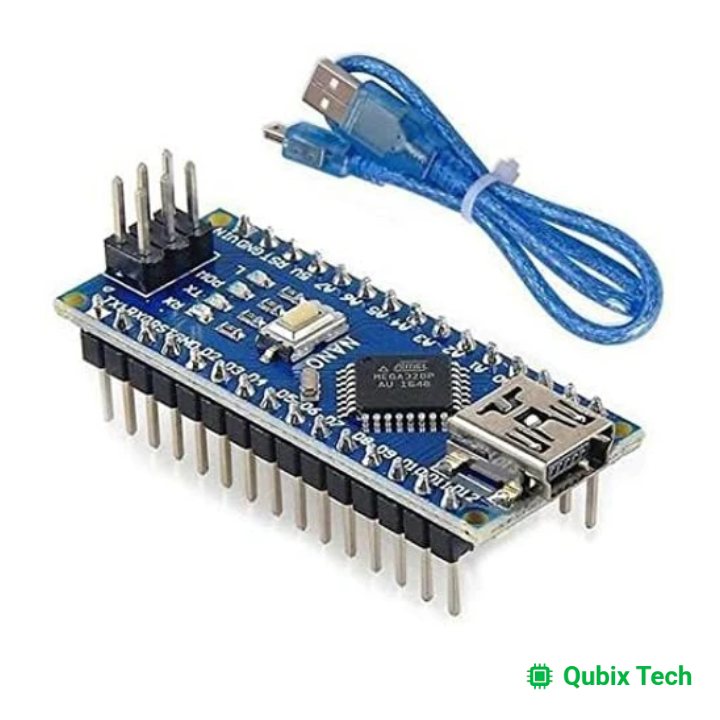
Arduino Nano V3.0 with Cable
The Arduino Nano V3.0 is a compact, breadboard-friendly microcontroller board based on the Atmel ATmega328. Designed for DIY electronics, embedded projects, robotics, and prototyping, it offers the same functionality as the Arduino Uno but in a smaller form factor.

4×4 Keypad Keyboard 4×4 Membrane Switches Matrix Keypad 16 Key Thin & Flexible With Cables Connector Keypad 4×4 For Arduino
The 4x4 Membrane Keypad is a compact, lightweight, and easy-to-use input device featuring 16 tactile keys arranged in a 4-row by 4-column matrix. It is ideal for microcontroller projects requiring user input, such as Arduino, Raspberry Pi, ESP8266, and other embedded systems. The thin, flexible design allows for seamless integration into a variety of projects.

HC-05 Bluetooth Module
The HC-05 is a popular, low-cost Bluetooth module for adding wireless serial communication (UART) to microcontrollers like Arduino, supporting Bluetooth 2.0 + EDR, and acting as both a master and slave device, ideal for remote control, robotics, and data transfer, communicating via simple AT commands and a default 9600 baud rate. It's known for its versatility, compatibility with smartphones, and ease of integration, though voltage level shifting (3.3V to 5V) is often needed for Arduino.
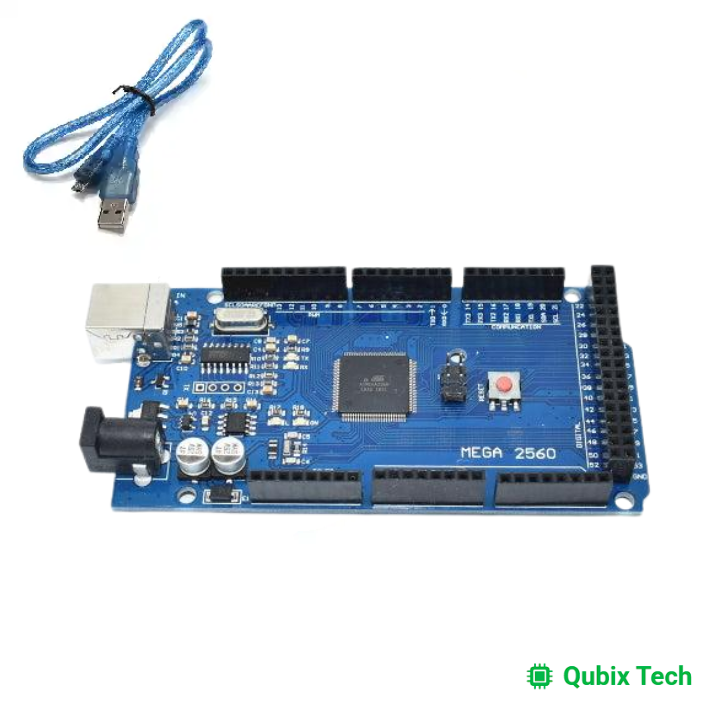
Arduino Mega 2560 R3 (Arduino Compatible) Microcontroller
The Arduino Mega 2560 R3 (Compatible) is a powerful, open-source microcontroller board built around the ATmega2560 chip, designed for complex projects needing extensive I/O, featuring 54 digital pins (14 PWM), 16 analog inputs, 4 UARTs, and 256KB Flash memory, offering seamless compatibility with Arduino IDE and shields, making it ideal for robotics, 3D printing, and advanced IoT applications. "Compatible" versions often use CH340G USB chips but function identically, providing a cost-effective alternative to official boards.
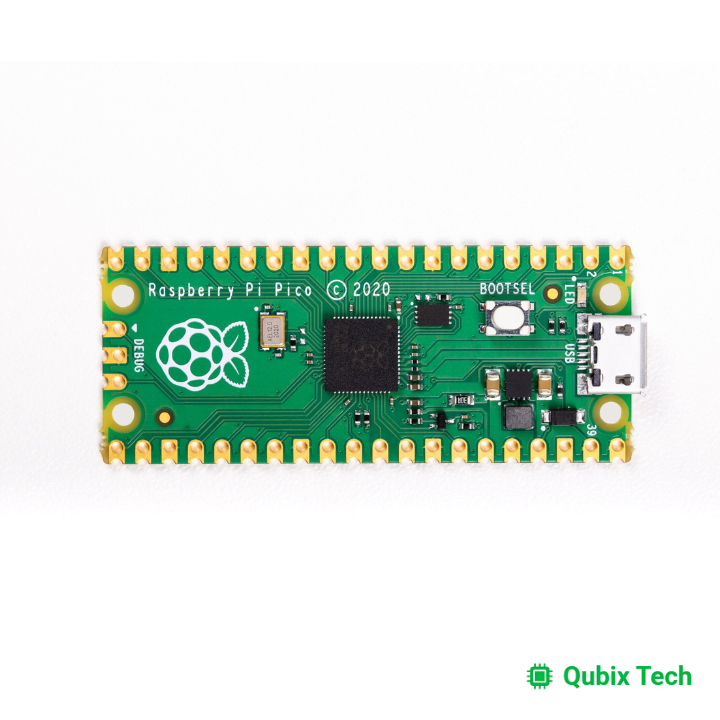
Raspberry Pi Pico microcontroller (Original)
The Raspberry Pi Pico is a low-cost, high-performance microcontroller board designed by Raspberry Pi. It is built around the custom RP2040 microcontroller chip, delivering powerful dual-core processing, flexible input/output options, and low power consumption. The Pico is ideal for embedded systems, IoT projects, robotics, DIY electronics, and educational use. With extensive GPIO capabilities, programmable I/O (PIO), and support for popular programming languages like C/C++ and MicroPython, the Raspberry Pi Pico offers exceptional versatility for both beginners and advanced developers.

Arduino Uno with Cable
Arduino UNO is the best board to get started with electronics and coding. If this is your first experience tinkering with the platform, the UNO is the most robust board you can start playing with. Microcontroller: ATmega328P Operating Voltage: 5V Supply Voltage: 7-12V Maximum supply voltage: 20V Digital I/O Pins: 14 (of which 6 provide PWM output) Analog Input Pins: 6 DC Current per I/O Pin: 40 mA DC Current for 3.3V Pin: 50 mA Flash Memory: 32 KB (ATmega328) of which 0.5 KB used by bootloader SRAM: 2 KB (ATmega328) EEPROM: 1 KB (ATmega328) Clock Speed: 16 MHz

ESP32-CAM WiFi Module
ESP32-CAM WiFi Module ESP32 Serial to WiFi ESP32 CAM Development Board with OV2640 Camera Module